Is It Safe Replace a Breaker Without Turning Off the Main?
I’ve been asked this question more times than I can count. Usually it’s said in a lowered voice, like someone asking if they can sneak an extra cookie before dinner. Can I really replace a breaker without turning off the main? Short answer? Sometimes. Long answer? Pull up a chair.
I’ve worked panels where everything went smoothly and others where my heart rate spiked for reasons I don’t like to admit. Electricity has a way of keeping you humble. It doesn’t care how confident you feel that day.
Let’s talk honestly, electrician to human.
Why People Even Ask This Question
Most folks don’t ask out of laziness. They ask because shutting off the main can be a pain. Servers reboot. Sump pumps stop. Someone always loses unsaved work. I get it.
Homeowners and even some handy pros want to replace a breaker quickly, quietly, and without shutting down the whole house. The idea feels efficient. Almost clever. But efficiency and safety don’t always shake hands.
What Actually Happens Inside the Panel
Here’s the part that makes people uncomfortable. Even with the main breaker switched off, parts of your panel stay live. The service lugs feeding the main breaker still carry power straight from the utility. No off switch for those.
So if you plan to replace a breaker with the main on, you’re working inches from live components that can ruin your whole week in a flash. Gloves help. Experience helps more. Neither makes you invincible.
I’ve watched apprentices freeze mid-task once they realized what was really energized in there.
Can You Replace a Breaker Without Turning Off the Main?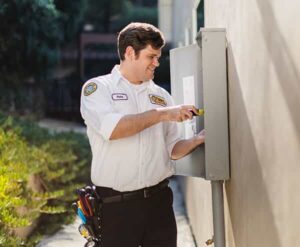
Yes. Physically, it’s possible to replace a breaker without turning off the main. Electricians do it sometimes, usually in commercial settings where downtime costs money.
But possible and smart aren’t twins.
- If you slip.
- If your screwdriver arcs.
- If the breaker doesn’t seat cleanly.
That’s when things get loud and bright fast. Electricity has zero patience.
I’ve done it. I don’t enjoy it. And I wouldn’t recommend a homeowner try it on a Saturday afternoon with YouTube confidence.
Situations Where It’s a Hard No
Let’s be blunt.
If you don’t know how to identify line vs load at a glance, don’t replace a breaker live.
If your panel is older, cramped, or corroded, don’t replace a breaker live.
If your hands shake when you’re nervous, don’t replace a breaker live.
Some panels feel like they were designed by someone having a bad day in 1978. Brittle plastic. Loose bus bars. Zero room for error.
That’s not bravery territory. That’s roulette.
Personal Story (Yeah, I Learned This One the Hard Way)
Early in my career, I watched a seasoned tech replace a breaker without killing the main. Smooth as butter. I thought, How hard can it be?
Next job, similar setup. I tried it. My screwdriver brushed the bus just enough to remind me that confidence isn’t insulation. The bang echoed. My pride didn’t survive.
Lesson learned. Some risks look smaller from a distance.
What Professional Electricians Actually Do
Here’s the quiet truth. Many pros still shut off the main unless there’s a strong reason not to. Hospitals. Data centers. Places where downtime causes real damage.
For homes? We flip it off more often than people think.
That’s part of being stubbornly honest electricians. No shortcuts just to look tough.
Replacing a breaker is routine work, but routine doesn’t mean casual. The process matters.
If You’re Set on Doing It Yourself
I won’t pretend people won’t try. If you plan to replace a breaker on your own, here’s the safest advice I can give without crossing lines.
- Turn off the main.
- Use proper PPE.
- Stand on a dry surface.
- Keep one hand behind your back.
- Work slowly, even if it feels awkward.
- And if anything feels off, stop. That gut feeling is older than logic for a reason.
Replacing a breaker should never feel rushed.
Cost vs Consequences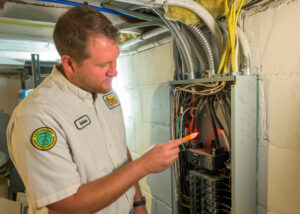
People worry about the price of hiring someone to replace a breaker. Fair. But medical bills cost more. So does a fried panel, or worse, a fire that starts months later.
Electricity plays the long game. Mistakes don’t always show up right away.
I’ve replaced breakers that someone else “fixed” years earlier. Burn marks hidden behind plastic. Loose connections waiting for the right load.
That’s the stuff that keeps electricians up at night.
When It Makes Sense to Call a Pro
Call someone if:
- The breaker keeps tripping without reason
- You smell heat or plastic
- The panel hums or crackles
- You’re unsure what amperage to use
A pro can replace a breaker, check the bus, and spot issues you didn’t know to look for. That experience matters more than tools.
FAQ: Real Questions I Hear All the Time
Is it legal to replace a breaker yourself?
In many areas, yes. Codes vary. Permits sometimes apply. Skill still matters more than legality.
How long does it take to replace a breaker?
For a pro, minutes. For a homeowner, longer. Rushing is how mistakes sneak in.
Can a bad breaker cause a fire?
Absolutely. Loose connections build heat quietly. That’s how problems grow.
Do I need special tools to replace a breaker?
Insulated tools help. Knowledge helps more. Fancy gear won’t save sloppy work.
Should I upgrade the breaker type while I’m there?
Sometimes. AFCI and GFCI breakers add protection, but compatibility matters.
Final Thoughts From the Field
You can replace a breaker without turning off the main. That doesn’t mean you should. I’ve seen enough panels to know humility beats heroics every time. Electric work rewards patience. It punishes shortcuts.
If you’re unsure, call someone who’s done this a thousand times and still respects the risks. That respect is what keeps the lights on and everyone breathing easy.