
The furnace runs. You hear it kick on, air comes out of the vents, and the house still sits three degrees under what the thermostat claims. Nothing’s broken, exactly that’s the frustrating part. Nine times out of ten what I find in that cabinet isn’t a failed part. It’s dirty furnace components that have been quietly choking the system since last winter.
Airflow Drops Before Anything Breaks
Your blower moves a set volume of air across the heat exchanger. Let the wheel build a coat of dust and the fins stop grabbing air the way they were shaped to. You feel it as rooms that never catch up back bedroom stays cold, hallway’s fine, the system just runs.
Filters speed this along. A one-inch fiberglass filter in a Richmond house can load up in six weeks during pollen season instead of three months, and plenty of homes around Lakeside sit on crawl spaces with return ducts running through them.
If one room is cold and the rest of the house is comfortable, that’s usually duct design or a closed damper. Dirty furnace components show up as a whole-house complaint.
Short Cycling Usually Starts at the Flame Sensor
Burner lights, you hear it, warm air starts moving, and forty seconds later everything shuts down. Then it tries again.
That’s usually the flame sensor a thin rod sitting in the flame, reading a few microamps of current to confirm the burner lit. Coat it in soot and it stops reading, so the board closes the gas valve. Correct behavior. Miserable comfort.
Burners get the same treatment. Debris in the ports makes the flame lift or burn lazy and yellow, and you get less heat than the nameplate promises.
I’ve seen this go wrong when a homeowner takes emery cloth to the sensor rod. Scrubbing takes material off and shortens its life. Cleaning dirty furnace components is a light-touch job.
Overheating Is the Expensive Version of This
When airflow drops, heat stacks up around the heat exchanger faster than the blower carries it away. The high-limit switch trips, burners cut off, blower keeps running, cycle repeats. Do that a few thousand times over a decade and metal fatigues.
Cracks let combustion gas into the air stream, which moves this out of the comfort category entirely.
Age does most of that damage on its own, to be fair. Restricted airflow from dirty furnace components just gets you there sooner.
And if a cracked exchanger means a new furnace, Richmond requires a mechanical trade permit for the replacement even a like-for-like swap. A contractor who tells you otherwise has told you something useful about how they operate.
What a Real Tune-Up Actually Catches
A furnace tune-up isn’t a car wash. A real one runs 45 minutes to two hours, and most of that is measurement. Amp draw on the blower motor. Static pressure across the system. Temperature rise checked against the nameplate range, because that number tells a technician more about airflow than any amount of looking does.
Indoor air quality comes up constantly here, and I’ll be straight with you your filter and duct condition matter more for that than the furnace cabinet does.
Not every system needs everything cleaned every year, either. A four-year-old furnace in a tight Short Pump build is a different animal from a 1920s Church Hill house with a crawl space and original returns. Dirty furnace components accumulate at whatever pace the house sets.
Get Ahead of It
Waiting rarely gets cheaper. A blower motor fighting a clogged system fails in January, not October, and emergency replacement costs a multiple of the inspection. Five Star Services One Hour Heating and Air runs stubbornly honest furnace repair techs across Richmond the kind who hand you the parts they pulled instead of describing them.
FAQ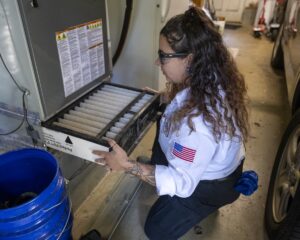
How do I know if it’s dirt or my furnace is just old?
Age and dirty furnace components look the same from the thermostat. The tell is measurement temperature rise and static pressure. If those land in spec after a cleaning, it was dirt. If not, you’ve got a tired system.
Can I clean the flame sensor myself?
You can, carefully, with a clean rag or fine abrasive pad power off at the switch first. Just know that if it fouls again in two months, the sensor isn’t the actual problem. Something upstream is.
Does this actually raise my gas bill or is that just a sales thing?
It’s real, but gradual. Longer cycles burn more gas, and you notice a pattern rather than a spike. Richmond’s winter design temperature is 18 degrees, so most of our heating season is mild enough to hide a small loss until a hard January.
How often does this stuff actually need cleaning?
Once a year for the inspection. Whether dirty furnace components need actual cleaning depends on the house pets, crawl space returns, a filter nobody changes. Some systems get a wipe-down, some need an hour of work.
My furnace smells like burning dust every fall, is that normal?
First burn of the season, usually yes dust on the heat exchanger cooking off. It should clear within an hour. A smell that lingers for days, or anything sharp or electrical, means shut it down and call someone.
If it’s running longer than it used to and you don’t know why, get someone out before the first hard freeze.