Trenchless vs. Traditional Sewer Replacement
The gurgling started a week ago and you let it slide. Then Saturday the shower backs up while the washer’s draining, and now a guy you met an hour ago is under your house telling you the lateral’s done. I’ve stood in that spot with a lot of people. What they want to know first is always the same thing: do you have to dig up my yard?
What Digging It Up Looks Like
Open trench, foundation out to the city main. Old pipe comes out. New PVC goes in on a bed of stone, then backfill, then we tamp it.
On most Richmond lots that trench crosses the front walk and a good strip of lawn. Line runs under the driveway, part of the driveway comes out too.
Woman over on Grove Avenue last spring her lateral ran straight under a willow oak she’d been babying since her kids were little. She asked me twice if the tree would make it. Told her probably. We got it through. I wasn’t certain.
Two, three days before anybody pours concrete or puts sod down.
What I like is that I can see the whole thing. Grade, bedding, all of it sitting there in daylight. Nothing to guess at.
How Trenchless Works
Two small pits instead of the trench, and the new pipe goes in between them.
Pipe bursting is most of what I do. Cable down the old line, a head that splits the pipe outward into the dirt, new HDPE pulled in right behind it. One pass. Lining’s the other one resin-soaked sleeve goes in wet, cures hard, and you’ve got a new pipe inside the shell of the old.
Bursting is what I want on orangeburg pipes. Postwar houses on the Southside, out around Lakeside, decent chance the original lateral is that stuff. Wood pulp and tar, more or less. It goes oval years before it ever collapses, and lining a pipe that’s already squashed is money in a hole.
Most of these I’m loaded up and gone by dinner.
When Trenchless Isn’t the Answer
Both methods follow the pipe that’s already there. That’s the catch, and it’s the whole catch.
Line’s got a belly low spot holding water the new pipe inherits it. Richmond clay does this all day. Swells wet, shrinks dry, and a pipe laid at decent pitch thirty years ago has quietly settled into a dip that catches solids. New material won’t fix bad grade.
I’ve had to say that to people who’d already spent the trenchless number in their head. Nobody takes it well.
Collapse, same answer. Joints shifted sideways, same. Two 90s and a wye inside fifteen feet and the head’s got nowhere to go.
Anybody quoting you trenchless before they’ve run a camera is guessing with your money. Ask to watch the footage. Sit there and actually watch it.
What Belongs in the Quote
Trenchless costs more per foot up front. Wrong number to compare.
Make both bids end in the same place lawn back down, walk poured, done. Not pipe in the ground. Restoration eats a real chunk of the total here and it almost never shows up on the plumbing line.
Ask who’s pulling the permit. City wants one before anybody opens ground on a lateral, and work running out toward the main in the right-of-way needs its own approval on top of that. Outfit that shrugs at that question is the outfit that hands you a three-week delay halfway through the job.
Then ask what pipe you’re getting, what the warranty actually covers, who’s swinging the shovel. You learn a lot from how fast those answers come back.
Don’t Sit on a Failing Line
Waiting is how a job you could’ve booked in October turns into sewage on the crawlspace floor on a Saturday night. Five Star Services Benjamin Franklin Plumbing sends stubbornly honest plumbers out to Richmond houses, and that runs both directions we’ll tell you when trenchless fits your property and when you’re better off with the trench.
Frequently Asked Questions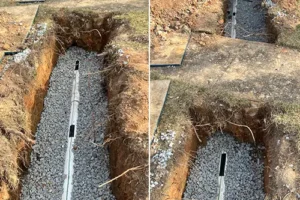
So how much digging is there really?
Two pits, usually. One near the house, one out by the connection, few square feet each. Not a trench across the yard. Trenchless sewer line replacement isn’t zero digging, and anybody telling you it is, is selling.
my house is from the 50s, is my pipe that orangeburg stuff?
Decent odds if it’s the original and nobody’s swapped it. Camera tells us in ten minutes. That pipe was sold with a fifty-year life on it and they quit making it in the seventies, so the math on a 1950s Richmond house ran out a good while ago.
Can you line it if roots got in?
Depends what the roots did. Came in through a joint and the pipe still holds its shape, usually yes, once we’ve cut it all out. Cracked it open and soil’s been washing in for years, that’s a replacement.
How long am I without a toilet?
Most of one working day on a bursting job. We’ll tell you before we start when the line goes down and when it’s back. Don’t run the dishwasher that afternoon and you’ll be fine.
Does insurance cover any of this?
Standard homeowners generally excludes the buried lateral. Some carriers sell a service line endorsement, few dollars a month, covers exactly this. Worth pulling your declarations page before the work starts instead of after.
If it’s gurgling today, call somebody this week. These things never let go on a Tuesday morning.