What To Do If Sewage Is Backing Up Into Your Home
Wastewater is coming up through the basement floor drain, or the lowest toilet in the house gurgles and overflows every time the washer empties. You want to know what to do in the next ten minutes, not a plumbing lecture. Short version, stop putting water into the system, keep everybody away from it, and call somebody. The rest can wait until the mess stops growing.
Stop All Running Water
This is the step people skip, and it decides whether you’re mopping a corner or gutting a room.
Every gallon that goes down a drain has to leave through one pipe. If that pipe’s blocked, the water finds the lowest opening in the house instead, which in most Richmond homes means a basement floor drain or a first-floor tub. Nobody flushes. No showers, no dishwasher, no laundry.
I’ve watched a small backup turn into a two-room disaster because someone upstairs had no idea what was happening downstairs and started a load of towels. Tell the whole house, not just the person standing next to you. Then keep everyone out of the water sewage carries bacteria that a shop vac and good intentions won’t handle, and kids and pets should be nowhere near it.
Figure Out How Much of the House Is Affected
You don’t need to diagnose anything. You just need to notice two or three things before the plumber gets there, because it changes what comes off the truck.
Check whether it’s one fixture or several. A single sluggish toilet with everything else draining normally is usually a local clog. But if flushing upstairs makes the basement drain burp or overflow, the blockage is out in the main line between the house and the street and in Richmond, that run is the homeowner’s responsibility, not the city’s.
Timing matters too. If the sewage showed up during one of those August downpours we get, that points somewhere very different than a backup that appeared on a dry Tuesday after three weeks of slow drains.
Don’t Reach for the Drain Cleaner
Chemical drain cleaner isn’t moving a main line blockage. It’ll sit in the standing water and turn a dirty job into a hazardous one for whoever shows up to clear it, and on older cast iron it can do real damage on the way down.
Same goes for the rental drain snake. On a fixture clog, fine, have at it. On a line packed with roots, you’ll either accomplish nothing or lose the head in the pipe and now we’re fishing that out before we can start.
One more thing. If sewage has reached outlets, a plugged-in appliance, or the panel, don’t wade in to save the Christmas decorations. Cut power at the panel only if you can get to it without stepping in water. Otherwise leave it and wait.
Why This Keeps Happening to Richmond Houses
Roots are the leading cause around here, and it’s no mystery why. The Fan and Northside have mature oaks sitting directly over clay lines laid generations ago. Roots find a hairline gap at a joint and keep going.
Then there’s the pipe itself. Homes built from the late forties into the early seventies often got Orangeburg compressed wood fiber sealed with tar which sags and flattens with age. If your house is from that stretch and sewage trouble keeps coming back, a camera inspection tells you in twenty minutes whether you’re fighting a clog or a failed pipe.
Grease and “flushable” wipes account for most of the rest. And in the older parts of the city still on a combined sewer system, a hard storm can push the whole network past capacity, which is a different animal than anything in your yard.
Call Before the Damage Spreads
Waiting on this costs money by the hour flooring, drywall, and baseboards soak it up fast. Our stubbornly honest plumbers will tell you whether it’s a fifteen-minute clog or a line that needs replacing, and you’ll see the camera footage either way. Call Five Star Services before the drying-out bill outruns the plumbing bill.
FAQ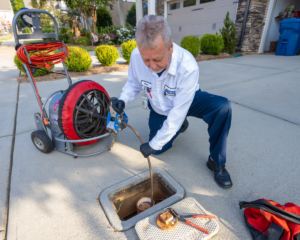
Why is my toilet backing up when I run the washing machine?
Both drain into the same main line. If that line’s restricted, the washer’s discharge has to go somewhere, and it picks the lowest fixture in the house. That’s a strong sign the problem is outside your walls, not in the toilet.
Can I just plunge it?
On one blocked toilet with everything else draining fine, sure give it a few honest tries. If every drain in the house is slow, or water surfaces somewhere else while you’re plunging, stop. You’re just relocating the mess.
Is it safe to stay in the house?
Depends how far it went. A small amount contained to a basement drain, with the area shut off, is usually livable. If sewage reached carpet, finished living space, or ductwork, plan on staying somewhere else for a night or two.
Do I need a permit to replace my line?
A full sewer lateral replacement in Richmond requires a plumbing permit, and work extending into the public right-of-way means coordinating with the city on top of that. Your licensed plumber handles the paperwork. Cleanouts and spot repairs are a lighter process.
How long does clearing one usually take?
Most straightforward blockages run forty-five minutes to two hours from arrival, camera check included. A collapsed section full of roots is a different day and a different number. Anybody quoting a firm price before seeing the line is guessing.
If there’s water on the floor right now, quit reading, tell everyone to stay off the plumbing, and pick up the phone.