The warning signs your heater needs a tune-up
I’ve lost count of how many “my heater is fine” calls end with a customer standing next to the unit saying, “Okay… that’s not normal.” And honestly, I get it. Heaters are like the offensive line of your home—quiet, hidden, and only noticed when they miss a block.
But there are warning signs that show up weeks (sometimes months) before a full breakdown. The trick is knowing what’s actually worth paying attention to… and what’s just a harmless quirk.
Let’s walk through the warning signs I look for when I’m trying to catch problems early—before you’re wearing a hoodie indoors and negotiating with space heaters like they’re a long-term relationship.
The warning signs your heater is quietly crying for help
Your heat cycles way too often (or never stops running)
If your heater turns on and off like it’s nervous, that’s one of the most common warning signs. Short cycling can come from dirty filters, a misbehaving thermostat, airflow issues, or even a flame sensor that’s getting flaky.
On the flip side, if it runs nonstop and still can’t hit your set temperature, you might be dealing with clogged burners, low airflow, duct leaks, or a system that’s simply out of adjustment. Either way, it’s working harder than it should. And that’s money leaving your wallet.
The air smells… weird
A little dusty smell at the first heat-up of the season? Normal. A sharp burning smell that doesn’t fade after a few cycles? That’s a warning sign you don’t ignore.
I’ve walked into homes where the homeowner said, “It’s probably nothing,” and the blower motor was cooking itself. If the smell has a plastic or electrical edge to it, shut the system down and get it checked. Your nose is trying to help you here.
Your utility bill creeps up for no good reason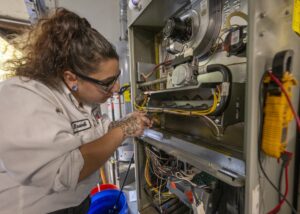
When the weather hasn’t changed much but your bill does, that’s one of those quiet warning signs that’s easy to shrug off. I get it—bills fluctuate. But if you’re seeing a steady climb and the forecast hasn’t been unusually cold, something’s off.
A tune-up can fix small efficiency killers: dirty burners, poor combustion, clogged filters, restricted vents, weak capacitors, or a blower wheel that looks like it’s been breaded and deep-fried in dust. Yes, I’ve seen that. More than once.
You hear new sounds (and they’re not charming)
A heater should sound… boring. If it starts rattling, booming, squealing, or making that “I’m about to break something” clunk, those are classic warning signs.
Rattling can mean loose panels or duct vibration. Squealing can point to belt issues (older systems) or motor bearings crying for mercy. Booming can be delayed ignition. Yes, that matters.
One time I heard a boom so loud the homeowner apologized like they did it. We found a burner issue that could’ve gotten ugly if it kept going.
Uneven heat from room to room
If one room feels like Florida and the other feels like a garage, it’s not always “bad insulation.” Sometimes it’s airflow balance, duct issues, blower performance, or a system that needs cleaning and adjustment.
Uneven heat is one of those warning signs that usually means something is drifting out of spec. And when one thing drifts, other things follow.
What a tune-up actually fixes (and why it matters)
A tune-up isn’t just “wipe the unit and collect payment.” A proper one checks the stuff that causes breakdowns: heat exchanger safety, combustion quality, flame sensor condition, gas pressure, temperature rise, capacitor readings, blower amperage, venting, drain lines (for high-efficiency units), and thermostat accuracy.
When those small pieces get ignored, your heater starts compensating… and that’s when the big failures happen. The flame sensor gets dirty, so ignition takes longer. The blower motor works harder because the filter’s packed. The burners run inefficiently because nobody’s cleaned them in three years. It all snowballs.
FAQ: Heater tune-ups and comfort fixes
How often should I schedule a heater tune-up?
Once a year is ideal—early fall is perfect. Regular service helps catch warning signs before they turn into no-heat emergencies. If you wait until it’s 40 degrees outside and the system won’t start, you’re gonna wait longer for a tech and pay more.
Is a tune-up worth it if my heater is still working?
Yes. Most breakdowns show warning signs first. A tune-up is cheaper than a weekend emergency call, and it keeps the system running smoother. Think of it like changing your oil—your car runs now, but skipping it long enough will cost you big later.
What’s the biggest sign my heater is unsafe?
Persistent burning smells, visible soot, frequent shutdowns, or headaches when it runs. Those are serious warning signs—turn it off and call a pro. Carbon monoxide doesn’t mess around.
Can I do any of this maintenance myself?
You can change the filter regularly (every 1–3 months depending on the type). Keep the area around the unit clear. Check that your vents aren’t blocked. But the technical stuff—gas pressure, combustion analysis, electrical checks—leave that to someone with the tools and training.
How long does a typical tune-up take?
Usually 60–90 minutes if everything’s in decent shape. If we find warning signs that need attention, it might take longer. But you’ll know what’s going on before we do anything.
The bottom line
If you take nothing else from this: most heaters don’t fail out of nowhere. They whisper first. Learn the warning signs, and you’ll stay warmer, spend less, and avoid that dreaded “why is it 58 degrees in my house?” moment.
Your heater talks to you. You just have to listen.