How to Deal with Clogs That Just Won’t Quit
We’ve all been there. You run water in the sink, and instead of swirling down the drain, it bubbles up — slow, stubborn, and worse by the minute. Maybe your shower turns into a shallow bathtub. Maybe your toilet gurgles every time you run the washing machine.
That’s your plumbing system telling you something’s not right. And the message is clear: There’s a clog, and it’s not going away on its own.
At Benjamin Franklin Plumbing, we’ve tackled everything from minor backups to full-blown blockages with sewer lines wheezing for help. Let’s walk through how we clear a clogged plumbing system when you should call us, and what you should never try on your own.
How Do You Know It’s More Than Just a Slow Drain?
A slow drain here or there is normal. Hair builds up. Soap scum coats the pipes. But if you see more than one drain misbehaving or water backing up in strange places, you’ve likely got a bigger problem.
- Here’s what we tell folks to look out for:
- Multiple slow or backed-up drains at once
- Water backing up into sinks, tubs, or showers
- Gurgling or bubbling sounds in toilets or drains
- Foul smells coming from drains or pipes
- Wet spots or standing water in the yard (for main line clogs)
If you’re checking more than one of those boxes, it’s time to move beyond plungers and drain cleaners.
What We Do to Clear a Clogged Plumbing System
We don’t show up with a bottle of blue liquid and cross our fingers. We clear the clog the right way, with the tools and know-how to get it done without guessing. Here’s how we do it:
1. Inspect the System
We start by listening to you. What’s clogging, when it started, and how often it happens gives us a lot to go on.
Then, we inspect the drains in question, check the cleanouts, and test how far the backup goes. If the whole house is affected, we head straight for the main sewer line.
2. Video Camera Inspection (If Needed)
If we suspect the issue is deeper in your sewer line or main drain, we feed a camera into the pipes. This shows us exactly where the clog is and what’s causing it — tree roots, grease buildup, collapsed pipes, you name it.
We don’t guess. We look, then act.
3. Use the Right Equipment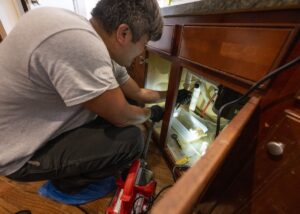
Depending on what we find, we might:
- Snake the line with a hand auger or power auger
- Hydrojet the system, blasting the inside of the pipes with high-pressure water
- Break up and remove roots if they’ve worked their way in
- Clear traps and branch lines if the clog is closer to the fixture
We bring multiple tools to every job because no two clogs are alike. And we don’t stop until the water flows like it should.
4. Test and Verify
Once the clog is cleared, we test the drains again. We run water, flush toilets, and check for gurgles or slow flow. If we used a camera, we send it back in to confirm everything’s clean and intact.
5. Give You the Real Story
We tell you what we found, how we fixed it, and what to watch for. If your pipes are aging or damaged, we’ll talk you through your options — without pressure, just the facts.
When to Call Benjamin Franklin Plumbing
We love a handy homeowner. But there’s a line between clearing a minor clog and trying to force down something that shouldn’t be there. Call us when:
- You’ve used a plunger or drain cleaner, and the problem came right back
- Multiple drains are slow or backed up
- The main line is clogged — you’ll usually know because every drain in the house is acting up
- You smell sewage in the house or yard
- You’ve got standing water near a floor drain
- Your toilet gurgles every time you run water elsewhere
Stubbornly honest plumbers don’t push panic or pressure. We show up, fix the problem, and tell you what we’d do if it were our own house.
FAQ
Should I use chemical drain cleaners?
We don’t recommend them. Most don’t fix the problem — they can damage older pipes or make future repairs tougher. If you’re reaching for a bottle every month, it’s time to get to the root of it.
What’s the difference between snaking and hydrojetting?
Snaking breaks up a clog using a cable and cutting head. Hydrojetting uses high-pressure water to scrub the inside of the pipes clean. Snaking clears, but hydrojetting clears and cleans.
Can I rent a drain snake and do this myself?
You can, but power augers can cause damage if used wrong. We’ve seen broken pipes, bent rods, and nasty messes when DIY snaking goes sideways.
How do I prevent clogs?
Don’t pour grease down the drain. Use hair catchers in the shower. Avoid flushing wipes, even the “flushable” ones. And have your main line inspected every couple years if you’ve had issues before.
How do I know if it’s the main line that’s clogged?
If every drain in your house is affected — especially if the lowest drains (like basement or shower) are backing up first — the main line is likely the issue.
Ready to Get the Water Flowing Again?
If your drains are talking back — bubbling, backing up, or refusing to drain — don’t wait. Clogs don’t fix themselves. And the longer you wait, the bigger the problem gets.
At Benjamin Franklin Plumbing, we’ve seen it all. And we don’t play games. We’ll show up with the right tools, clear the clog, and give you the truth about what caused it. That’s what stubbornly honest plumbers do.